up_researchers.jpgA GROUP OF RESEARCHERS finished their two-month study on the reproductive status of a coral species at the reefs in Sapaw area, Mabaw and Manga marine sanctuaries, all in Tagbilaran City, and part of Maribojoc Bay on Wednesday last week. Maribojoc Bay is the biggest bay in the province of Bohol that serves as one of the major fishing grounds of the small fishermen.

The research team comprised of Dr. Alasdair Edwards of the University of Newcastle, United Kingdom; Dr. James Guest of the National University of Singapore, Singapore; Dr. Romeo Dizon, Ms. Kareen Vicentuan Cabaitan, Patrick Cabaitan and Robert Lambayan of the University of the Philippines-Marine Science Institute.

They conducted the research from March 6 to May 6.They observe samples of 18 species including Acropora cytherea, A. hyacinthus, A. humilis, A. valida, A. muricata, A. sarmentosa, A. millepora, A. anthocercis and A. tenius.

Preliminary results showed that of the 201 total sampled colonies, two of unknown species are suggested to spawn in April. Another 11 colonies that included A. humilis, A. cytheria, A. tenius and A. spp. have already contained white eggs which are expected to spawn in April or May.

Some of the sampled coral species contained no visible eggs, suggesting that these will spawn from May to June. Typically the colony will spawn after the next full moon.

Coral colonies will spawn when eggs become pigmented which usually occur during a period of about three to ten days following the full moon, although timing can vary considerably from one site to anther. Normally, most spawning activities happen within three hours after sunset, between 6:30 pm and 9:30 pm.

The research study aimed to determine any similarity on coral mass spawning of the coral reefs in Maribojoc Bay to the coral reefs in Bolinao, Pangasinan. The study on coral reproduction status is crucial for the component local government units in the aspect of policy-making process and the development of management mechanisms that will lead to the restoration of degraded coral habitats along Maribojoc Bay.

The research is in coordination with the City Government of Tagbilaran, Bohol Environment Management Office (BEMO), PROCESS-Bohol, Incorporated and the Maribojoc Bay Executive Management Office (MBEMO).

The UP-based Global Environment Facility-Coral Reef Targeted Research (GEF-CRTR) does research on coral reef restoration techniques and coral reproduction at sites around the Philippines.

As part of the project, the UP-based research group has foreign collaborators, local students and researchers who have been doing research on the timing and synchrony of spawning in corals around Bolinao, Pangasinan, according to UP Professor Emeritus Edgardo Gomez, coordinator of GEF Southeast Asia Center of Exellence.

He said in 2006 and 2007, their group witnessed the mass spawning of corals near Bolinao during March, April, May and June.So they would like to compare if the same timing of spawning happens elsewhere in the Philippines and they have chosen the reefs around Tagbilaran City as potential sites for this purpose.

By: Mr. Jovenal Edquilag (MBEMO Executive Director)

maribojoc_fibers_product_catalog.jpgcatigbian_bamboos_product_catalog.jpgcrown_product_catalog.jpg
Please click to enlarge the product catalog. For orders, you may contact PROCESS-Bohol or Maribojoc Fibers@+639099065136;Catigbian Bamboos@ +639195044777; Crown Products@+639105287228


abatan_full_council_meeting_nov_3_08.jpg

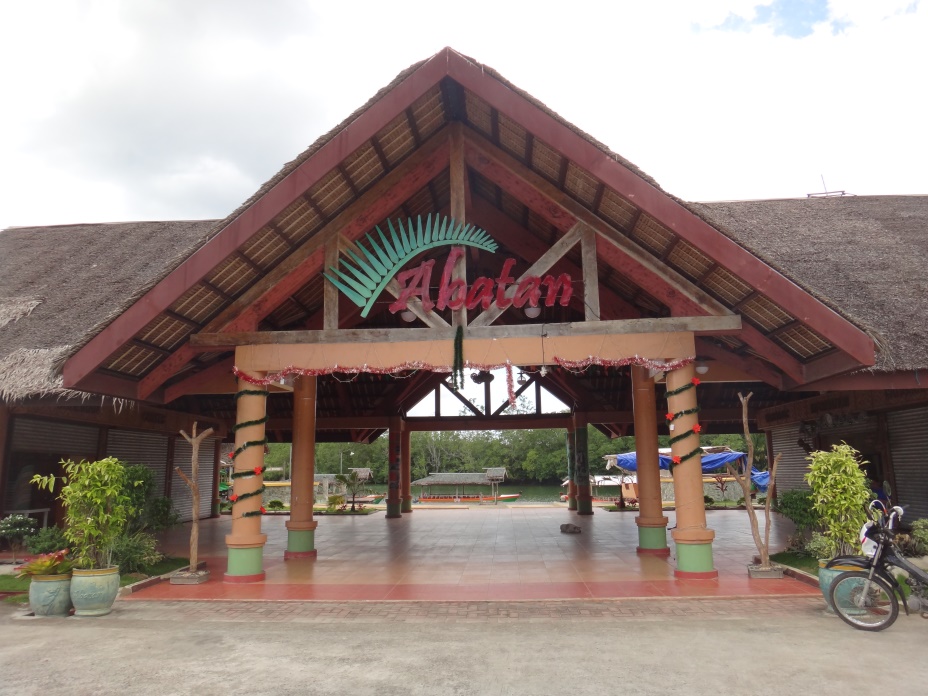
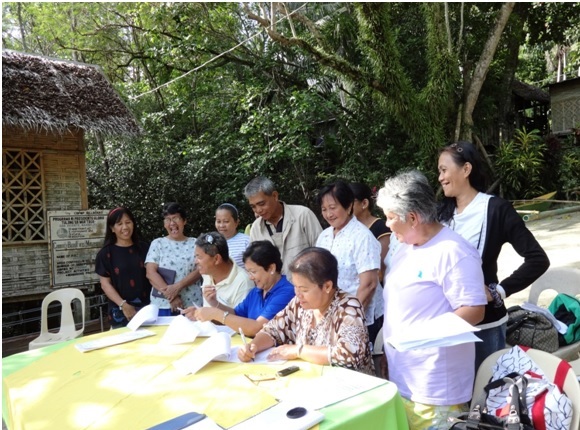
ABATAN CLUSTER LRED PLAN (presented by DTI-Bohol Provincial Director Nannette C. Arbon) and the Abatan River Ecotourism Master Plan (presented by Dominador and Stella Lopez of EGD Lopez and Partners) were approved by the Abatan River Development Management Council (ARDMC) represented by the Council Chairman Mayor Roberto L. Salinas of Catigbian, Mayor Victoria M. Chatto of Balilihan, Mayor Cecelia Rebosura of Antequera, Mayor Apolinaria H. Balistoy of Cortes and Mayor Leoncio Evasco, Jr. of Maribojoc. Gov. Erico B. Aumentado and Cong. Edgar M. Chatoo along with DTI 7 RD Asteria C. Caberte and Miriam Bacalso of GTZ-SMEDSEP 7, Provincial Tourism Council and representatives from private sector expressed their strong commitment of support for the development of the Abatan cluster.

A new and distinct tourist destination in the province is on its way that will surely enchant visitors for a rich natural and cultural heritage experience.

This was ascertained during the “Presentation of the Abatan River Ecotourism Master Plan and Abatan LRED Cluster Plan” on November 3, 2008 at the Bohol Tropics Resort.

The initiative is a masterpiece of Cong. Edgar M. Chatto of the First District of Bohol and the Abatan River Development Management Council (ARDMC) chaired by Mayor Roberto Salinas of the municipality of Catigbian and co-chaired by the mayors of the other four municipalities of Maribojoc, Cortes, Antequera and Balilihan (who were all present during the activity) with active coordination by partners from the German Technical Cooperation-SMEDSEP and the Department of Trade and Industry.

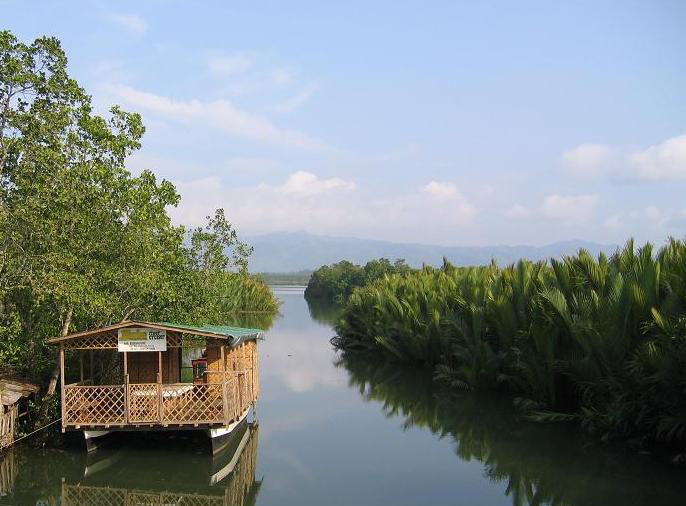
The Master Plan promotes Abatan River not only as the usual river tour, but as a real community-based ecotourism experiencing community life enjoying the serenity of the river and its nature.

Thus, it is called “Abatan River Community Life Tour and Nature Experience”.

Furthermore, the branding of Abatan will continue with the adoption of a unified architectural character, basically-Asian Filipino with unique identifying features and indigenous materials appearing in all the major Abatan structures. (more…)


picture1.jpgIn the onset, I did not mind the NGO that came into our barangay (village) to operate. But after constant informal discourses with the Technician assigned, I decided to join the farmers association that was formed. Then I attended organizational meetings and seminars. We were trained on organic farming, agroforestry development, planting of forage crops for animals, and production of goats, chickens and pigs.


I was one of those who loaned for the purchase of goats. Since I learned the advantage of organic fertilizers, I no longer apply inorganic on our farm up to the present. What we are utilizing is goat manure. At that time we did not have enough supply of goat manure, we used bokashi (organic fertilizer) through another loan. Now that we have sufficient supply of this material, this is already the fertilizer that we use for our crops. My planted fruit trees are already big although not bearing fruit yet. The goats are also of great help to our livelihood. I was able to sell 5 goats already. During lean season and we don’t have money to buy, we will sell goat for rice, viand and other needs at home.


All in all, I would say that the project has helped a lot in enhancing our knowledge and improving our living conditions.


 By: Lydia G. Paluga

Member, Committee on Organic & Agroforestry Villa Suerte Farmers Association (ViSFA)
Villa Suerte, Bilar, Bohol


remy.JPGThe micro-enterprise project of our mothers’ organization has contributed a lot to our pockets through the percentage share that we get from the sales of our pastry products with our regular customers during town fiestas and in market outlets as well. The accumulated amount taken from the mark-up price of our commodities has helped defray the expenses for the daily needs of our respective families.

By: Remedios C. Yana

Kapunongan sa mga Inahan alang sa Kaugmaran Chairperson

San Vicente, Baclayon, Bohol


gabriel.JPGSince the formation of Bantay Banay (Family Watch) group in our barangay (village), cases of domestic violence such as physical abuse to women and children have been lessened. As a barangay official and the focal person of Bantay Banay in Tagbuane, I have a great role. One of my roles that I have done is the issuance of Barangay Protection Order (BPO) to the perpetrator of wife battery. Because of the BPO issued, it was observed that the negative attitude of the husband towards his wife has improved.


In similar situation, after talking to our neighbor who physically abused his child and told him of the new law on Child Abuse, I have also noticed that the father seemed to have reformed and I have never heard him beating his child again.


I am thankful to PROCESS-Bohol in organizing Bantay Banay in our barangay who contributed a lot to the transformation of human behaviors of some of our barangay constituents in treating their family members and close relatives.


By:Kag. Gabriel Gamil

Brgy. Official & Bantay Banay Focal Person

Tagbuane, Alburquerque, Bohol 


Dear Readers,

Beginning the month of July this year, we will integrate “Stories in the Field” of our partner communities who participate in the different programs, projects and activities of our organization. These stories were presented by our staff during our Year-end Assessment and Planning Workshop held last July 9-11. Our aim is to provide feedbacks to our donors who continually support our development efforts for improved quality of life of poor communities, particularly those of farmers and fishers.

Editor


boy_jumao_as.jpg

We, the fishers and farmers who are members of the Tangohay Fisherfolk Association (TAFA) had difficulty in borrowing money for farm production and fishing paraphernalia. Most of the lending groups have very high interest rates which the members could not afford to pay. The organization envisions helping its members improve their meager income. It then started to provide loans to its members with only 1% interest rate. The micro-lending project of the organization has now a total capital of PhP340,000.00 catering to 60 members. The successful implementation of the project is attributed to the support and assistance of PROCESS-Bohol.”

By: Rafael Jumao-as
Tangohay Fisherfolk Association (TAFA)
Barangay Tangohay, Dimiao, Bohol

jocelyne-photo.jpg
Student Intern Jocelyne Cardenas (far left) with experts from the different line agencies of the Abatan River Development Project together with PROCESS-Bohol staff led by Executive Director Emilia Roslinda (far right) and the local tour guides (in uniform) of San Vicente Mangroves Association pose at Tintinan Island in San Vicente, Maribojoc, Bohol.


My name is Jocelyne Cardenas and I am a Family, Youth, and Community Sciences major from the University of Florida. For a part of my summer vacation I was able to volunteer with PROCESS-Bohol. Though I only spent one week here (June 19-27), PROCESS-Bohol gave me the opportunity to see first-hand what it takes to be a successful NGO in the Philippines. I had the chance to participate in a women’s group two-day training session (where I attempted to learn Bisayan dialect), see a hand-made broom demonstration by KNI - a local women’s group of Albur (which was amazing), and I got to sit in on several meetings on varying topics (taking place on rivers, mangroves, and churches!), just to name a few. The expansiveness of the organization’s coverage is remarkable and has yet to cease to amaze me. All the exposure I’ve had has been beneficial for my education and has made me more excited than ever to join the Peace Corps upon graduation (and perhaps return to the Philippines to learn some more Bisayan). Daghang salamat!

Next Page »